


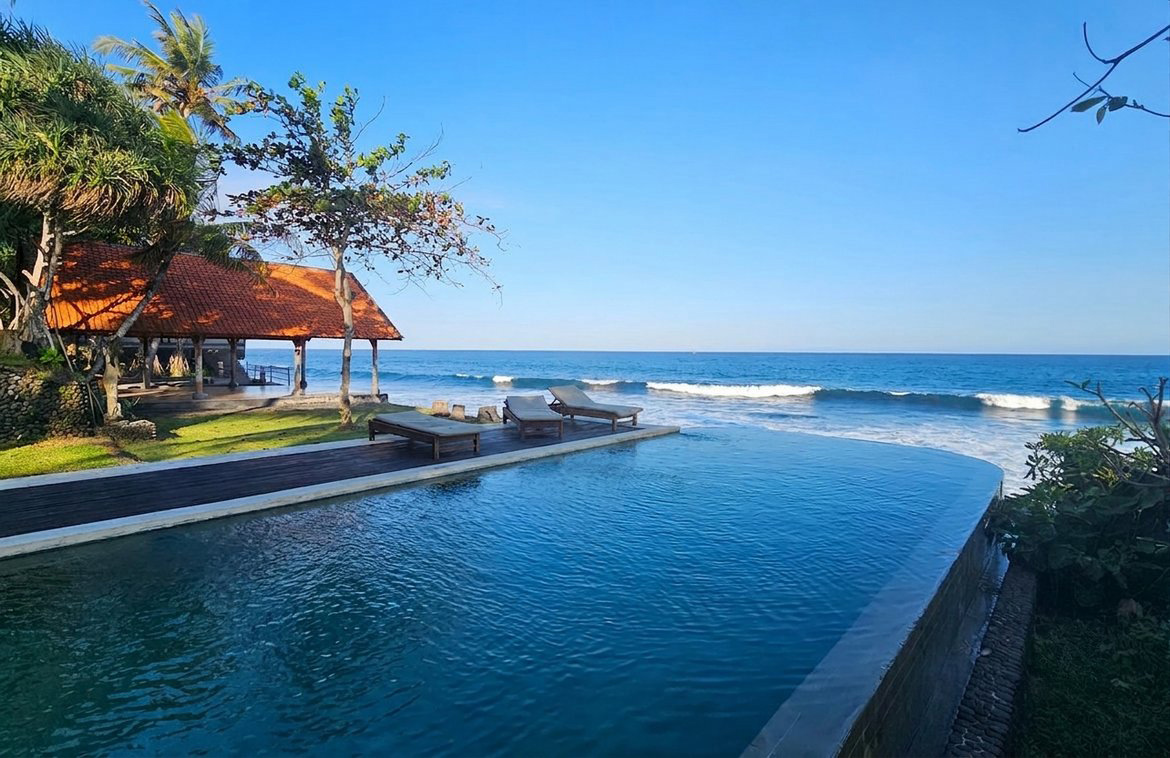

Can foreigners buy property in Bali in 2026? Yes - but the word “buy” needs to be used carefully. A foreign buyer can legally acquire a leasehold interest, may qualify to hold a residential Right to Use title, and can invest through an Indonesian foreign-investment company in appropriate commercial circumstances. What a foreign individual cannot do is register Indonesian freehold land, known as Hak Milik, directly in his or her own name.
That distinction matters because Bali property is often marketed with simplified labels such as “foreign ownership”, “freehold for foreigners” or “guaranteed 80-year ownership”. Those descriptions can conceal very different legal rights. Before paying a reservation fee or signing a sale agreement, the buyer should understand exactly what is being acquired, who will be registered as the legal holder, how long the rights last, whether the intended use is permitted, and how the investment can later be sold or inherited.
This guide explains the principal acquisition structures available in 2026, the risks of nominee arrangements, the difference between owning a property and operating a rental business, and the due-diligence steps that should be completed before committing capital. For the broader acquisition process, read our complete guide to buying property in Bali in 2026.
Key takeaways
Foreign individuals cannot hold Hak Milik freehold land directly.
The main lawful routes are leasehold, qualifying residential Hak Pakai, and PT PMA/HGB for appropriate commercial investment.
A nominee does not make the foreign funder the registered freehold owner.
Owning or leasing a villa does not automatically authorise short-term rental operations.
The correct structure must be selected together with legal, planning, tax and technical due diligence.
Contents
- The answer in one sentence
- The legal foundation
- Why foreigners cannot own Hak Milik directly
- Option 1: Leasehold (Hak Sewa)
- Option 2: Hak Pakai (Right to Use)
- Option 3: PT PMA with HGB
- What about apartments?
- Structure comparison
- Why nominee structures are risky
- Ownership is not operating permission
- Due diligence checklist
- How to choose the right structure
- Recommended buying process
- Why buyer representation matters
- Frequently asked questions
- Conclusion
The answer in one sentence
The practical answer is that foreigners can participate legally in the Bali property market, but they do not all acquire the same type of right. The appropriate structure depends on the buyer’s purpose, residency status, investment horizon, intended use and appetite for corporate compliance.
For most private buyers, the relevant choices are a contractual leasehold or, where the statutory conditions are satisfied, a registered Hak Pakai title. A genuine commercial investor may instead use a PT PMA that holds Hak Guna Bangunan, usually abbreviated to HGB. Apartments can also be acquired under specific strata-title rules, although the legal structure of the project and its underlying land must be checked carefully.
The safest approach is therefore not to ask, “Can I own this villa?” but to ask, “What legal right am I acquiring, from whom, for how long, for what use, and with what exit route?”
The legal foundation: Indonesia uses different land rights
Indonesia’s land system is based principally on the Basic Agrarian Law of 1960. It recognises several different land rights rather than one universal concept of ownership. Hak Milik is the strongest hereditary land right and is reserved for Indonesian citizens. The law also recognises rights including Hak Guna Bangunan, Hak Pakai and Hak Sewa, each with a different legal character.
The current framework for HGB, Hak Pakai and foreign residential ownership is developed further in Government Regulation No. 18 of 2021 and Minister of Agrarian Affairs and Spatial Planning Regulation No. 18 of 2021. These rules should be read together with the project-specific title documents, immigration requirements, spatial-planning rules and transaction documents.
A key point is that the legal category of the right matters more than the marketing label. A villa described online as “freehold” may be Hak Milik land that only an eligible Indonesian purchaser can acquire directly. A foreign buyer may be offered a lease over it, a conversion to Hak Pakai, or a company-based HGB structure. Those are not interchangeable outcomes.
Why foreigners cannot own Hak Milik directly
Hak Milik is commonly translated as freehold because it has no predetermined expiry date and can be transferred, inherited and used as security, subject to Indonesian law. However, Article 21 of the Basic Agrarian Law restricts Hak Milik to Indonesian citizens, with only limited categories of Indonesian legal entities permitted by regulation.
Accordingly, a foreign individual cannot simply appear before a notary, pay for a Hak Milik villa and have the Hak Milik certificate issued in the foreigner’s name. A PT PMA cannot hold Hak Milik either. Where a foreign purchaser is told that the property is “freehold”, the next question must be what lawful transaction structure will replace or sit over that Hak Milik title.
Our separate guide to freehold titles in Bali explains the title in more detail. Buyers comparing the economics of a perpetual Indonesian title with a time-limited lease should also read freehold versus leasehold property in Bali.
Common marketing mistake
“Freehold property available to foreigners” is incomplete unless the lawful foreign-buyer structure is stated.
Ask whether the offer is a lease, a conversion or grant of Hak Pakai, an HGB transaction, or merely a nominee proposal.
Option 1: Leasehold (Hak Sewa)
A leasehold, usually described as Hak Sewa, is the most common route for foreign individuals acquiring villas or land in Bali. It is fundamentally a contractual right: the Indonesian landowner remains the registered holder of the underlying title, while the foreign lessee receives the right to possess and use the property for the agreed term.
Typical Bali leases run for approximately 25 to 30 years, although shorter and longer periods are encountered. The commercial value of the lease depends not only on the headline term but also on the drafting. A well-structured agreement should address the precise property boundaries, payment, handover, permitted use, construction rights, access, utilities, assignment or subletting, insurance, default, inheritance, sale of the underlying land and the mechanism for any extension.
Extension clauses require particular attention. A clause saying that the parties “may agree” an extension later offers less certainty than a properly defined option with a workable valuation mechanism and clear procedural steps. Even a strong extension clause cannot eliminate every future risk, because price, landowner cooperation and legal conditions may change over decades.
Leasehold is often suitable for a private holiday home, a residence, or an investment where the buyer accepts a finite holding period. It can also be economically efficient because the buyer does not pay the full value of perpetual land rights. However, the remaining lease term will affect resale value, financing options and the pool of future buyers.
A lease does not automatically authorise commercial accommodation activity. A buyer intending to generate income should separately review zoning, building approvals, business licensing and tax. Our complete Bali leasehold guide covers the contract in greater depth, while our guide to building a house in Bali as a foreigner explains the additional issues when the lease covers undeveloped land.
Option 2: Hak Pakai (Right to Use)
Hak Pakai, or Right to Use, is a registered land right that can be available to qualifying foreign individuals for residential property. Under the current framework, the foreigner must hold the immigration documentation required by law. The property must also satisfy the applicable conditions concerning type, use, price, area and number of holdings.
For Hak Pakai over State land or Hak Pengelolaan land, the current statutory structure generally provides an initial term of up to 30 years, an extension of up to 20 years and a renewal of up to 30 years, subject to compliance and approval. Hak Pakai granted over Hak Milik land operates differently: it may be granted for up to 30 years and renewed through a further deed with the Hak Milik holder.
Foreign residential purchases are subject to minimum-price thresholds. Under the currently published ministerial decision, the minimum price in Bali is IDR 5 billion for a landed house and IDR 2 billion for an apartment unit. The rules also include restrictions relating to land area and the number of properties, with exceptions potentially requiring ministerial approval. Because implementation can vary and thresholds may be amended, the notary or land specialist should confirm the position at the time of the transaction.
Hak Pakai can be attractive to a qualifying buyer seeking a registered residential right rather than a private lease. It should not, however, be presented as a universal substitute for freehold or as the default structure for a rental-villa business. Its suitability depends on the buyer, the property, the underlying title and the intended use.
2026 reference point for Bali
Published minimum price for a landed home: IDR 5 billion.
Published minimum price for an apartment: IDR 2 billion.
Confirm the threshold and implementation with the transacting notary because regulations and local practice can change.
Option 3: PT PMA with Hak Guna Bangunan (HGB)
A PT PMA is an Indonesian limited-liability company with foreign investment. It can be appropriate where the acquisition forms part of a genuine commercial, development or operating business. An eligible Indonesian company may hold HGB, which grants the right to build and possess buildings on qualifying land.
For HGB over State land or Hak Pengelolaan land, Government Regulation No. 18 of 2021 generally provides an initial term of up to 30 years, an extension of up to 20 years and a renewal of up to 30 years. HGB over Hak Milik land may be granted for up to 30 years and renewed through a new deed with the Hak Milik holder.
The PT PMA route is more complex than buying a private lease. The company must have legitimate business activities, suitable KBLI classifications, investment and capital planning, tax registration, corporate governance, licensing and ongoing reporting. The land and operating structures must also match the actual project. Forming a company solely as a label for private villa ownership, without considering its regulatory and compliance obligations, can create more risk rather than less.
A company acquisition may involve the relinquishment or conversion of the seller’s existing title, a direct grant of HGB, or another notarial and land-office process. The exact route should be mapped before the purchase agreement becomes unconditional. A buyer considering development should also review our Bali land buyer’s rulebook and our guide to Bali zoning and licensing for villa investors.
What about apartments and strata title?
Foreigners may also acquire qualifying apartment units under Indonesia’s strata-title framework. The legal analysis should cover the title to the unit, the underlying land, the developer’s authority, the building approvals, management arrangements, service charges, foreign-purchaser price thresholds and any restrictions on transfer or use.
This route is less common in Bali’s villa-dominated market than in major Indonesian cities, and the word “apartment” does not itself prove that the unit is legally eligible for foreign ownership. Off-plan buyers should be especially cautious because they are relying on the developer to complete construction, secure the required approvals and deliver the promised title. Our guide to buying off-plan property in Bali sets out the principal developer and contract risks.
Comparison of the main structures
The following comparison is a practical starting point rather than a substitute for transaction-specific legal advice.
Why nominee structures are risky
A nominee structure usually places Hak Milik in the name of an Indonesian individual while private agreements, powers of attorney, loans or security documents are intended to give the foreign funder control or economic ownership. The structure is often sold as a way for a foreigner to obtain “freehold by proxy”.
This approach is legally vulnerable. The land register identifies the Indonesian nominee as the Hak Milik holder. The Basic Agrarian Law also prohibits direct or indirect transfers designed to place Hak Milik with a foreigner and provides severe consequences for prohibited transfers. Private documents cannot simply transform a foreigner into the registered Hak Milik owner.
Practical risk arises if the nominee dies, divorces, becomes insolvent, is subject to tax or creditor claims, changes position, misuses the title, or refuses to cooperate with a sale or mortgage. A bundle of side agreements may create contractual claims, but it does not provide the same legal position as holding an authorised registered title.
For these reasons, a buyer should not accept statements such as “the nominee is completely safe” or “everyone in Bali does it” as legal analysis. The transaction should instead be structured through a right the buyer or the buyer’s company is legally permitted to hold.
Buying the property is not the same as operating a rental business
Acquiring a villa and operating a villa-accommodation business are separate legal questions. A foreigner may hold a valid lease or residential title and still lack the zoning, building approvals, business licence, tax registrations or operating structure required for short-term accommodation.
This distinction has become increasingly important in 2026. A projected yield based on nightly rentals should not be accepted until the buyer has confirmed whether the property can be used and operated as assumed. Existing Airbnb activity is evidence of market demand, not proof of legal compliance.
Investors should therefore read our analysis of whether foreigners can rent out property in Bali in 2026, the comparison of short-term and long-term rental strategies, and our review of why many Bali villa ROI projections were too optimistic. A property that remains viable as a long-term residence may be more resilient than one whose valuation depends entirely on uninterrupted short-term letting.
The due diligence every foreign buyer should complete
The ownership structure should be selected only after the property itself has passed due diligence. The review should be coordinated by an independent Indonesian notary/PPAT or lawyer with relevant land experience, supported where necessary by tax, planning, surveying, construction and corporate specialists.
At a minimum, the buyer should verify the identity and authority of every seller, lessor, shareholder, director or representative involved. The original title certificate should be checked against the Land Office records, including the registered owner, title type, area, expiry date, mortgages, seizures, disputes and other encumbrances.
The cadastral boundaries should correspond with the land occupied on site. Access must be legally documented rather than merely used in practice. Buyers should confirm road width, rights of way, utility routes, drainage, water supply and any encroachment by neighbours or structures.
Spatial planning is equally important. The buyer should confirm the current zoning and obtain reliable advice on whether the intended residential, tourism, commercial or mixed use is permitted. Coastal, river, road, temple and other setbacks can materially reduce the usable area. A property’s marketing plan or an old permit is not a substitute for a current planning review.
For completed buildings, check the PBG or predecessor permit, approved drawings, completion or occupancy documentation where applicable, construction tax records, and consistency between the approved and actual building. A technical inspection should cover structure, waterproofing, roof, electrical systems, plumbing, pool, drainage, termites and major deferred maintenance.
For leasehold, review the underlying title and the landowner’s capacity, the original lease, assignment and subletting rights, extension provisions, landowner consents, inheritance, default and the treatment of buildings at expiry. For a PT PMA or developer sale, add corporate, licensing, tax and beneficial-ownership checks.
Finally, verify all taxes and transaction costs before agreeing the price. Our property tax guide for Bali explains why the gross purchase or sale price does not tell the whole story.
Do not release a non-refundable deposit until these points are controlled
The seller or lessor has authority and the title has been independently verified.
The zoning, access, boundaries, setbacks and intended use are acceptable.
The acquisition structure and completion route are legally workable.
Taxes, licences, permits and material building defects have been reviewed.
The agreement contains clear conditions, deadlines, refund rights and default remedies.
How to choose the right structure
No structure is automatically “best”. The correct choice is the one that lawfully fits the buyer’s actual purpose and remains workable throughout the intended holding period.
A private buyer seeking a holiday home for ten to twenty years may find a well-drafted leasehold proportionate and efficient. A qualifying foreign resident buying a higher-value home for personal occupation may prefer the registered nature of Hak Pakai. A developer, hotel investor or multi-unit operator may require a PT PMA and HGB, together with the correct operating licences. An apartment buyer may use a qualifying strata-title structure if the project and underlying land comply.
The analysis should include the exit from the beginning. Ask who can buy the interest later, what term will remain, whether the lease can be assigned, whether a title conversion is required, how the company can sell the land or shares, what taxes apply, and how inheritance will work. A structure that looks convenient on acquisition may be difficult or expensive to unwind.
Budget and location also matter. Compare the legal structure with current pricing in our guide to how much real estate costs in Bali, then consider the location-specific trade-offs in where to buy real estate in Bali in 2026 and the broader Bali property market outlook for 2026.
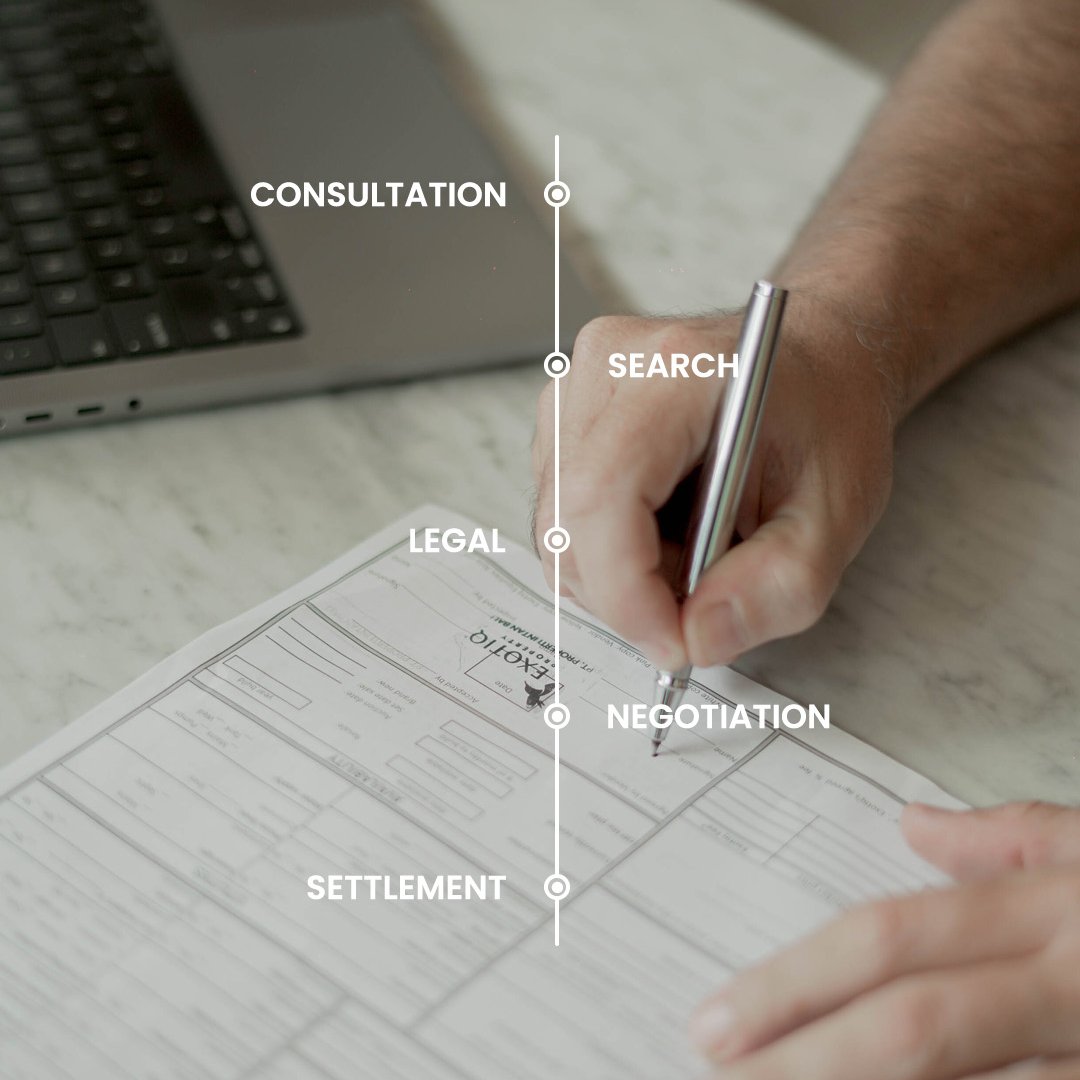
A safer step-by-step buying process
A disciplined acquisition normally follows a clear sequence. First, define the objective: residence, lifestyle use, long-term rental, licensed short-term accommodation, development or land banking. Second, establish the acceptable legal structures before viewing unsuitable properties.
Third, prepare a written search brief covering budget, location, title, minimum remaining term, permitted use, access, buildability and exit requirements. Fourth, identify and compare properties from the whole market rather than relying only on one seller’s inventory. Fifth, make any offer expressly subject to satisfactory legal, planning, technical, tax and commercial due diligence.
Sixth, agree the transaction structure, conditions precedent, deposit protection, payment stages, completion documents, default remedies and handover process in a professionally drafted reservation agreement or conditional sale and purchase agreement. Seventh, complete the land-office, notarial, tax and corporate steps before releasing the final payment.
This process is explained more fully in our 2026 foreign-investor buying guide. Buyers should resist pressure to reverse the sequence by paying a large non-refundable deposit first and asking legal questions later.
Why independent buyer representation matters
Most Bali agents are paid by the seller or developer whose property they market. That does not make them unsuitable sales agents, but it means the buyer should understand whom they represent and how they are compensated.
Independent buyer representation changes that alignment. A buyer’s agent starts with the client’s brief, searches across the market, compares opportunities, challenges pricing and projections, coordinates independent due diligence and negotiates for the buyer rather than for the listing.
Under Exotiq’s exclusive buyer’s agency service, we represent the buyer only. We do not accept seller commissions for ourselves; where a seller-side commission is offered, it is credited or redirected to the buyer in accordance with the buyer-agency agreement and applicable arrangements. That removes the incentive to recommend one listing because it pays the agent more than another.
The buyer still needs independent legal and tax professionals, but a properly aligned agent helps organise the acquisition around the buyer’s investment thesis rather than the seller’s marketing narrative.
Exotiq Buyer Agency principle
We represent the buyer, not the listing.
We do not retain seller commissions.
Any seller-offered commission is credited or redirected to the buyer in accordance with the agreement and applicable arrangements.
Conclusion: foreigners can buy, but the structure determines what they really own
Foreigners can legally acquire valuable property rights in Bali in 2026. The principal routes are leasehold, qualifying residential Hak Pakai, and PT PMA/HGB structures for appropriate commercial investments. Qualifying apartment ownership is also possible under specific rules. Direct Hak Milik ownership by a foreign individual is not.
The decisive issue is not whether the transaction is described as “safe” or “foreign-friendly”. It is whether the buyer is receiving a legally recognised right that fits the intended use, is supported by complete due diligence, and can be sold, inherited or restructured later without relying on informal promises.
Start with the investment or lifestyle objective, choose the structure before choosing the property, separate ownership from operating permission, and make the transaction conditional on independent verification. That is how a foreign buyer turns Bali property from an attractive idea into a defensible acquisition.
To discuss a property search or review your acquisition strategy, contact Exotiq Property or learn more about our exclusive buyer representation.
Frequently asked questions
Can a foreigner own freehold land in Bali?
No. Hak Milik, the Indonesian title most closely comparable to freehold, is generally reserved for Indonesian citizens. A foreign buyer must use a legally available alternative such as leasehold, qualifying Hak Pakai, or an appropriate company-based HGB structure.
Can a foreigner buy a villa in Bali?
Yes. The villa may be acquired through a lease, through Hak Pakai where the buyer and property qualify, or through a PT PMA/HGB structure where the acquisition is part of a genuine commercial investment. The correct route depends on the property and its intended use.
Is leasehold property safe in Bali?
A leasehold can provide a strong and practical contractual interest when the underlying title, landowner, boundaries, access and agreement have been properly checked. Its security depends heavily on due diligence and drafting, especially assignment, extension, default and landowner-sale provisions.
How long can a Bali lease run?
Commercial Bali leases commonly run for about 25 to 30 years, but the term is negotiated between the parties and longer or shorter arrangements exist. The remaining term and extension mechanism are central to value and resale.
What is Hak Pakai?
Hak Pakai is a registered Right to Use. It may be available to qualifying foreign individuals for residential property, subject to immigration documentation, minimum price, area, use and other statutory conditions.
Can a PT PMA own land in Bali?
A qualifying Indonesian foreign-investment company can hold HGB, not Hak Milik. The company must have a genuine and compliant business structure, suitable activities and ongoing corporate, investment, licensing and tax compliance.
Are nominee arrangements legal?
A nominee cannot make a foreigner the registered owner of Hak Milik. Structures intended to give a foreigner indirect freehold control are legally vulnerable and expose the buyer to the nominee’s personal, family, creditor and cooperation risks.
Can I rent out a villa after buying it?
Not automatically. Ownership or control of the property is separate from zoning, building approvals, business licensing, tax registration and the legal structure required for accommodation activity.
What is the safest way for a foreigner to buy property in Bali?
There is no single safest structure for every buyer. The safest process is to define the intended use, choose a legally permitted structure, conduct independent legal, planning, technical and tax due diligence, and sign a conditional agreement that protects the deposit and completion process.

Legal note: This article provides general information as at July 2026 and is not a substitute for transaction-specific Indonesian legal, tax, immigration, planning or investment advice. Regulations, thresholds and implementation practices may change. Buyers should obtain current written advice from qualified professionals before entering into a binding transaction.


